
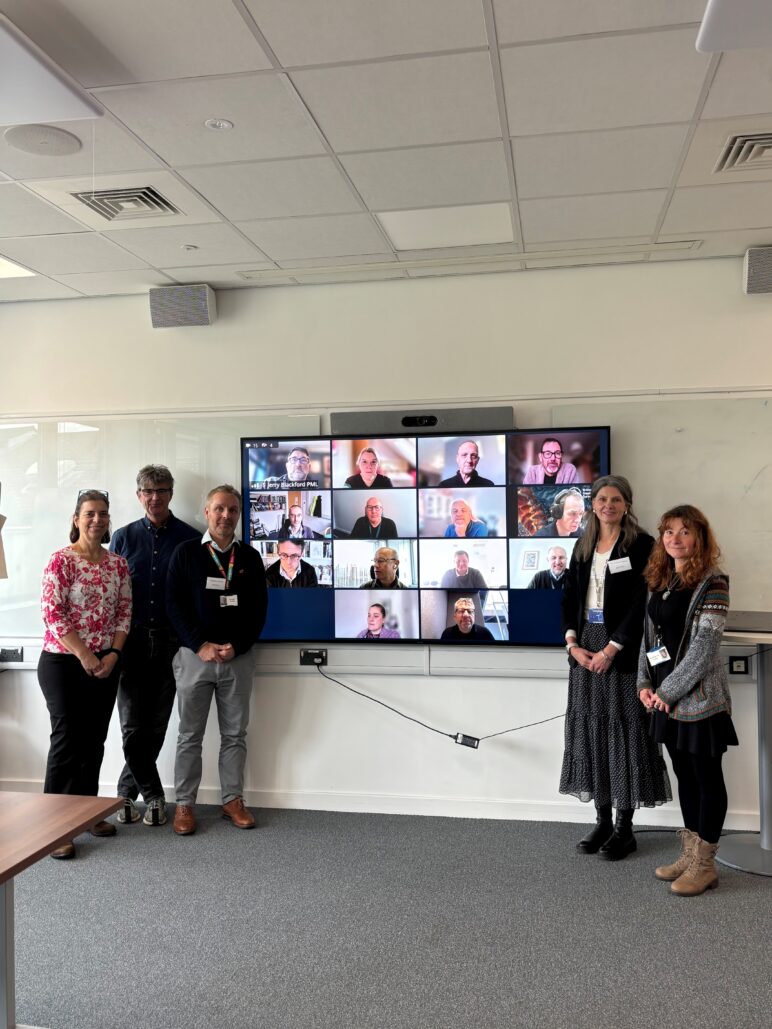
On 23rd October, lead scientists from the seven LTSM2 National Capability (NC) programmes and NERC Institute Science Directors met to discuss progress and the wider impacts of long-term multicentre science carried out by NERC. The hybrid meeting, hosted at the British Antarctic Survey, was organised by Jessica Richt and chaired by Geraint Tarling, on behalf of BIOPOLE. NERC understands that some environmental science challenges need long-term continuity, large infrastructure, and coordinated teams, which are too complex or costly for individual universities or short-term grants. It therefore funds NC programmes, such as LTSM2, to deliver science that is national and decadal in scale, brings together a critical mass of expertise, infrastructure, and resources, addresses strategic national needs and provides public-good services, such as advice to government and data for the wider community.
LTSM2 NC is particularly focussed on science questions that can be best addressed through pooling expertise across a number of NERC affiliated institutes. BIOPOLE, for example, is a collaboration between BAS, NOC, UKCEH, CPOM and BGS. The other six LTSM2 programmes, called AgZero+, CANARI, CHAMFER, HydroJULES, TerraFIRMA and MOET, each bring together a number of institutes to tackle themes such as next generation agriculture, UK water resources, underground carbon storage, adaptation to sea-level rise, and medium-term mid-scale to long term global-scale climate forecasting.
The meeting started with an update of progress from each of the seven programmes, which highlighted some impressive achievements as each programme now enters their penultimate year of funding. It then moved on to consider how these programmes can best convey their findings to both funders and wider stakeholders, including the public. Addressing this, Nadine Johnston (BIOPOLE) gave a presentation and then led a discussion on how to formulate “Impact storylines”, covering the essential elements that should be included and providing a case-study from BIOPOLE. An action that came out of the discussion was to form an LTSM2-wide group to formulate impact stories for each programme following a common approach. It was further decided that there should be an impact story covering the wider purpose of the LTSM NC programme itself. Further discussions covered cross-programme linkages and plans going forward. What was clear from the meeting was the need for greater communication and collective action across LTSM2 programmes to ensure that the case for continued NC science is made clearly and coherently to funders.
The Author of this Article Geraint Tarling (British Antarctic Survey)