
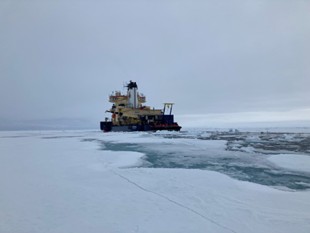
Scientists from the University of Copenhagen, in collaboration with BIOPOLE researchers at NOC, have uncovered an important but previously overlooked process occurring beneath the Arctic sea ice. Atmospheric nitrogen transformation into bioavailable nutrients is actively taking place under sea ice in the central Arctic, driven by microbial groups not typically associated with this role. These bacteria are able to convert dissolved nitrogen gas into ammonium—a nutrient essential for supporting algal growth—right in an environment long assumed to be too cold, dark, and inhospitable for such activity. Their presence and activity, especially near melting ice edges, suggest that the retreat of sea ice may actually increase the supply of bioavailable nitrogen in Arctic waters.
This matters because nitrogen is often the limiting nutrient for algae, which underpin the entire marine food web. If more nitrogen becomes available as ice diminishes, the Arctic Ocean could experience enhanced primary production, influencing everything from plankton communities to higher trophic levels. Since algae also absorb CO₂ as they grow, this process might subtly affect the region’s carbon uptake as well.
The researchers emphasise, however, that the Arctic is undergoing rapid change, and increased productivity may come with ecological shifts that are difficult to predict. They argue that this newly documented under-ice nitrogen fixation must be included in future models of Arctic biogeochemical and climate processes, as it appears to be a more significant component of the system than previously recognised.
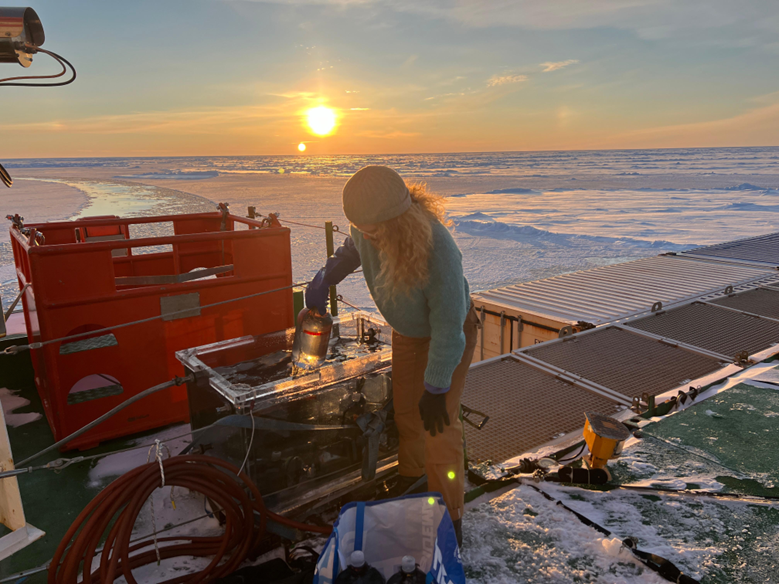
The Author of this Article Mar Benavides (NOC)
Read the publication here: Nitrogen fixation under declining Arctic sea ice | Communications Earth & Environment