
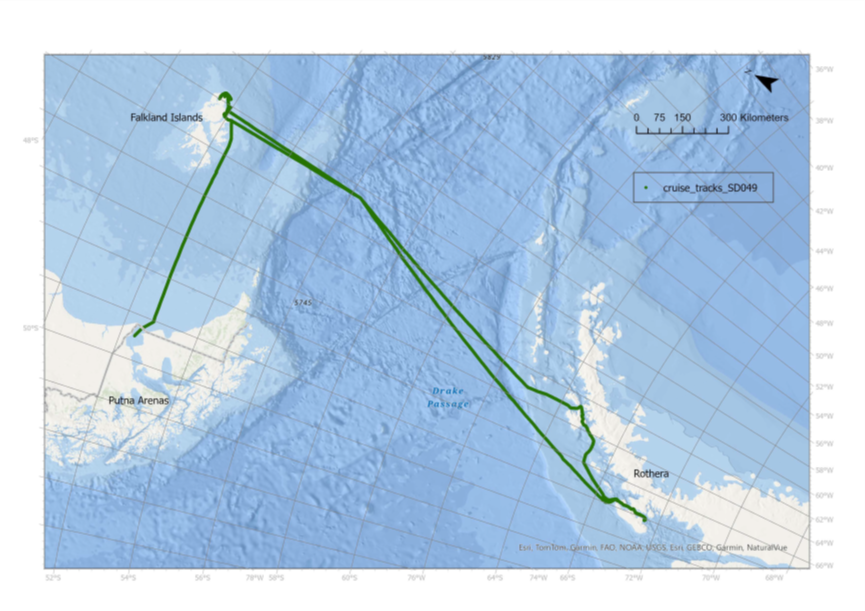
SD049 In May this year, BIOPOLE teams members Gabi Stowasser, Nadine Johnston, and Sammie Buzzard, together with BAS’s Tracey Dornan and Siobhán Foden (Fig 1) set sail from Punta Arenas on the RRS Sir David Attenborough (SDA) on its most late-season cruise to date. Bound for Rothera Research station on the West Antarctic Peninsula, they spent three dark and icy weeks investigating the concentration and flows of key nutrients (PIC, POC, POM, Phosphorous), oxygen, and salts, and the community dynamics of phytoplankton and zooplankton during the early winter as part of Southern Ocean BIOPOLE Cruise III. Data from this cruise complements work carried out on SD033 (Southern Ocean BIOPOLE Cruise I) during spring (as the zooplankton community, in particular the copepod Calanoides acutus develops in tandem with the spring phytoplankton bloom) and SD046 (Southern Ocean BIOPOLE Cruise II) during the autumn (as C. acutus descend to depth for their winter diapause). We mostly relied on the ships underway systems but also had the opportunity to sample zooplankton (and the environment) using pint sized science onboard Erebus and the SDA. The zooplankton community was examined through a combination of in situ mini bongo net deployments from Terror (Fig 2) and the SDA (Fig 3), underway water sampling (Fig 4) passed through a mini bongo net and a Planktoscope along the cruise transect (from waters the beginning of the Falkland Islands EEZ, down to Rothera Base, within the Ryder Bay environs, and back to the Falklands EEZ, Fig 5).
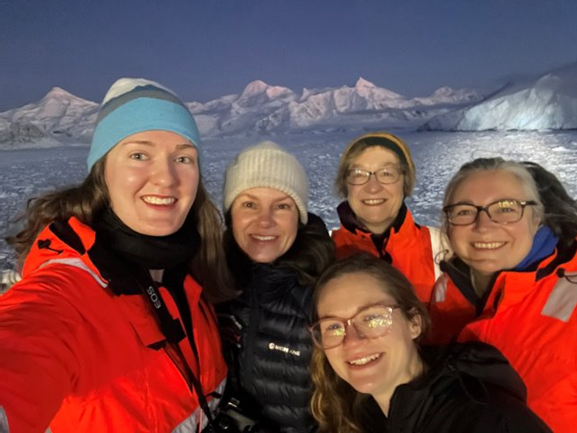
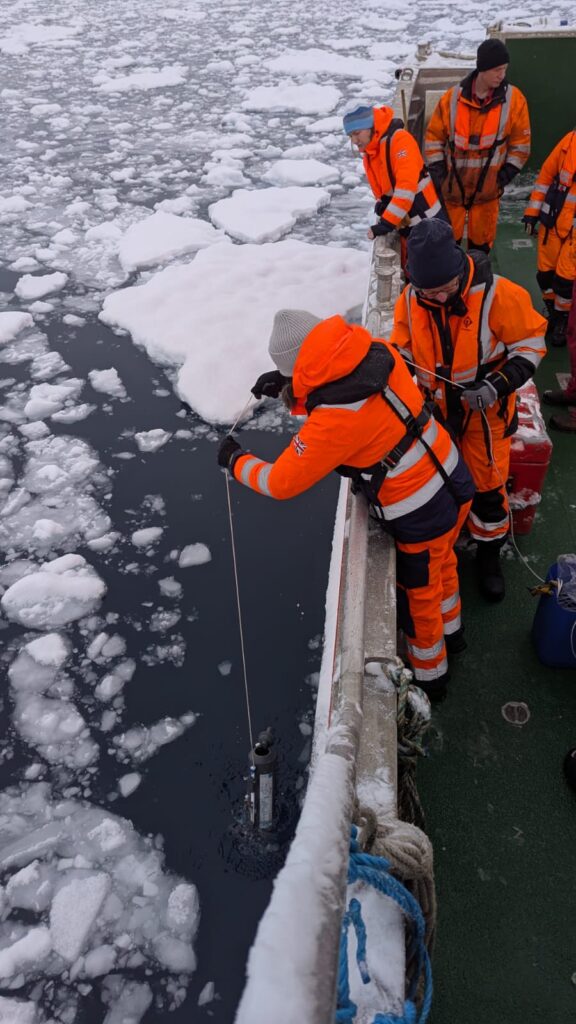
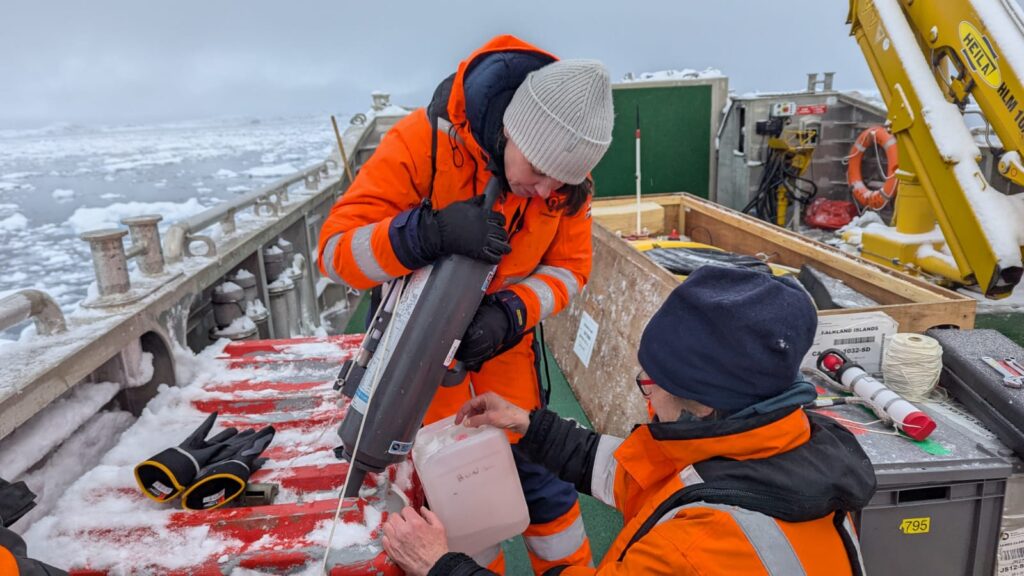
Figure 2: In situ mini Bongo net (+Niskin and CTD) deployments in Ryder Bay onboard the SDA’s Terror during SD049 to collect zooplankton, nutrient and oceanographic samples.
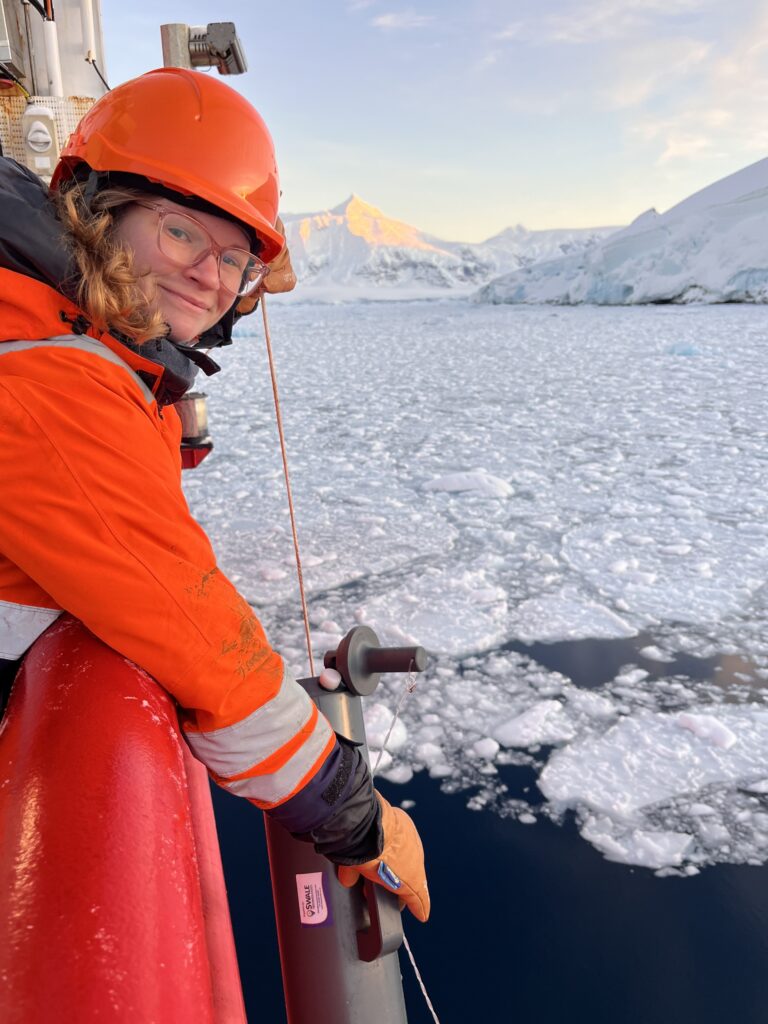
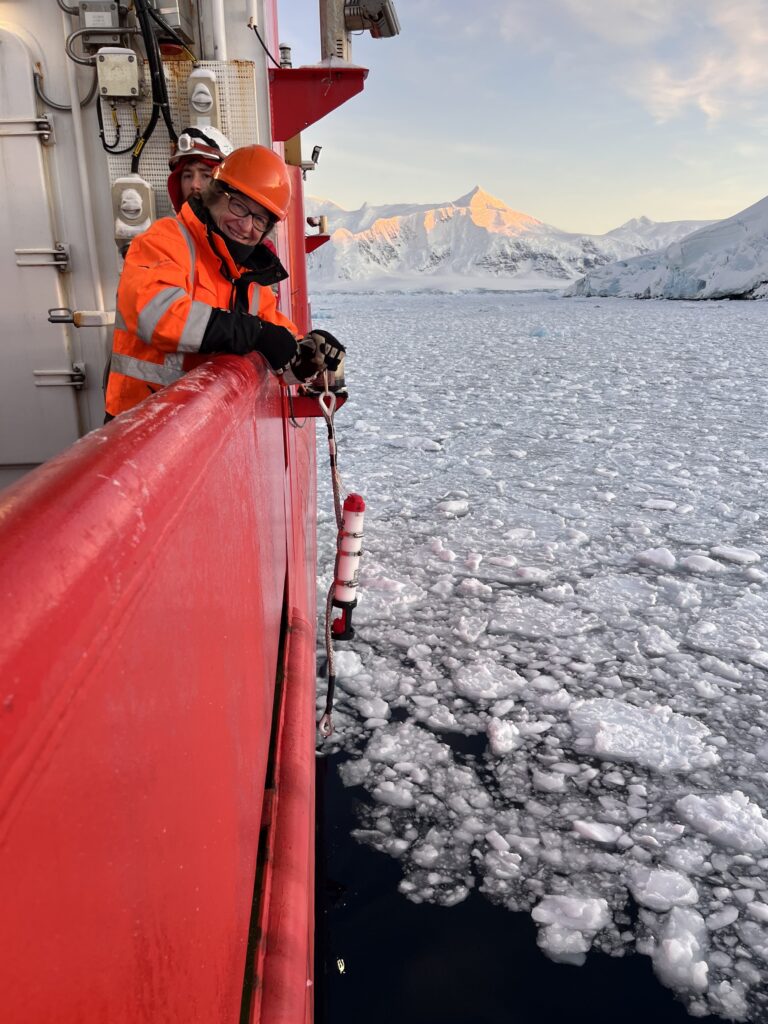
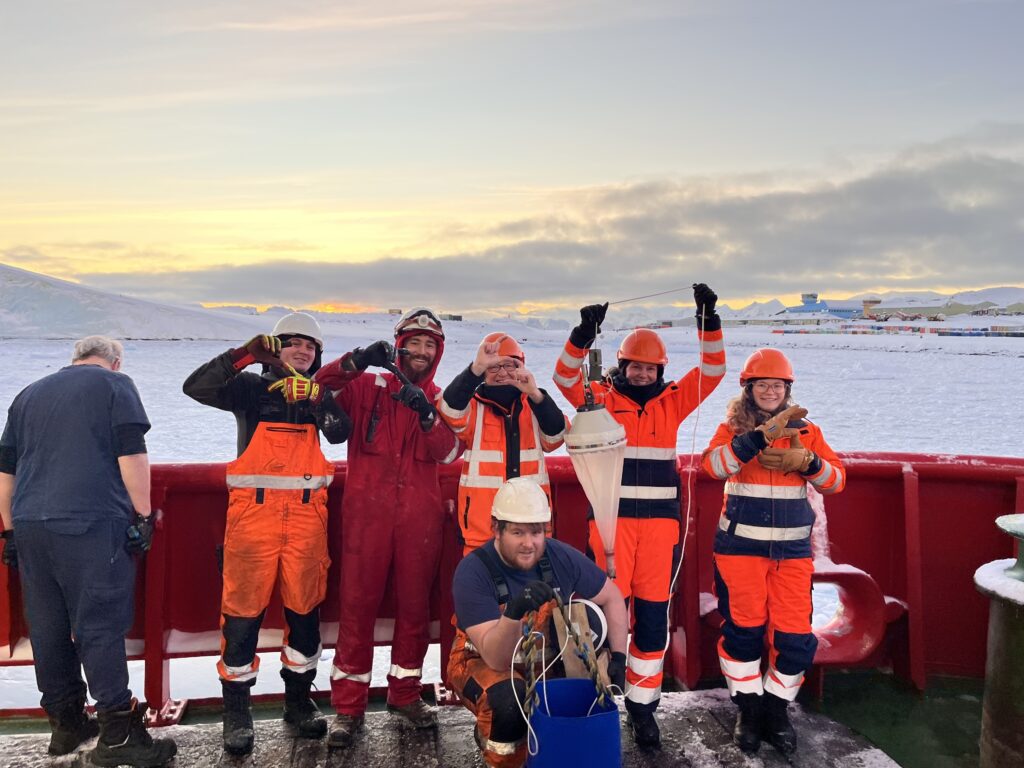
Figure 3: In situ mini Bongo net (+Niskin and CTD) deployments in Ryder Bay and Le Mer Channel onboard the SDA during SD049 to collect zooplankton samples and oceanographic variables.
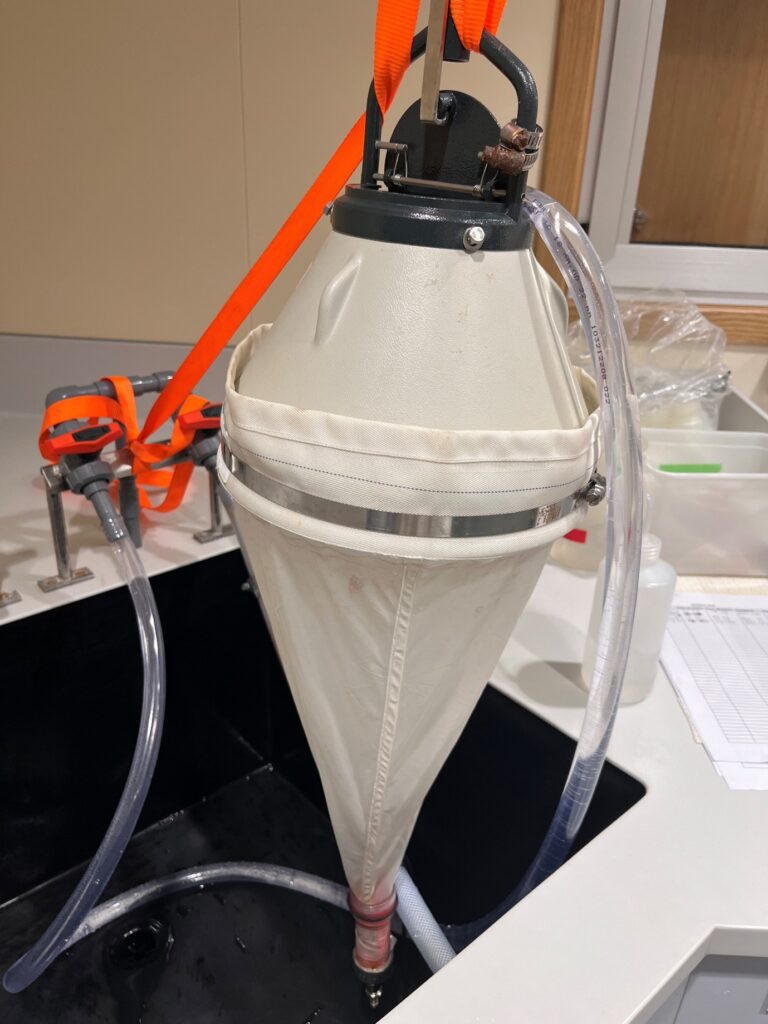
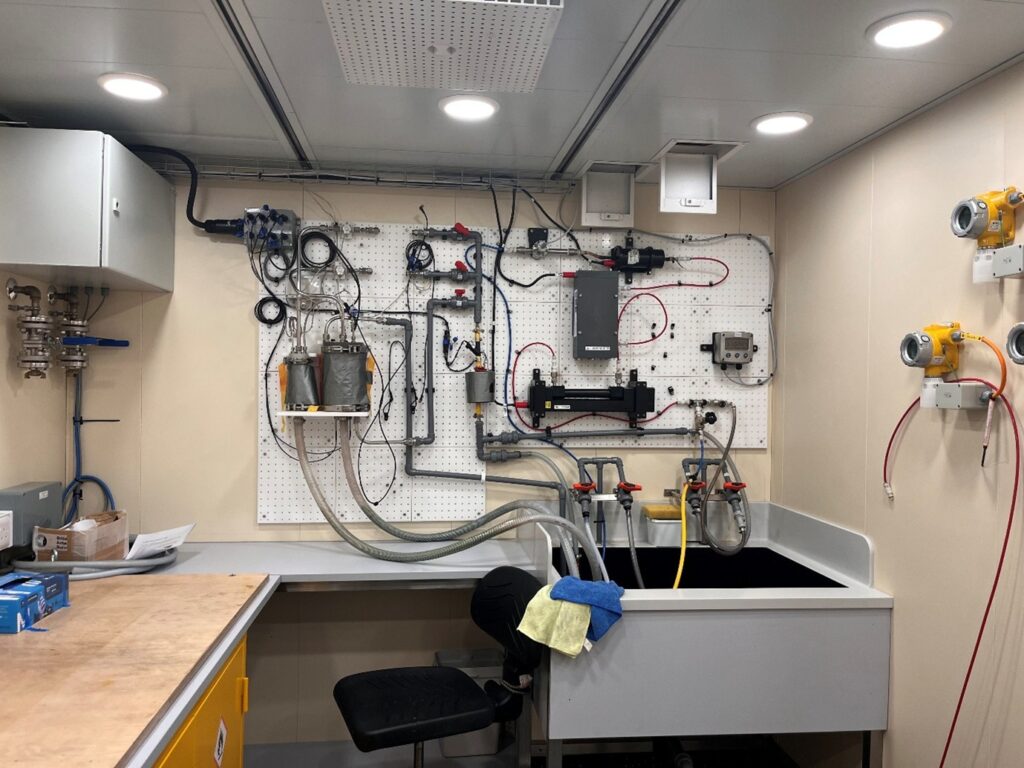
Figure 4: Underway sampling using mini bongo and planktoscope: onboard the SDA during SD049 to collect zooplankton samples the Main Lab for collecting zooplankton samples via a Mini Bongo net (left) and from the Uncontaminated Sea Water Laboratory for passing through a planktoscope (right).
SD050 Rapidly Followed SD049, After a Turn Round in Punta Arenas…
The science party consisted of Hugh Venables, Mike Meredith and Rhiannon Jones from Cambridge, with Sean McLoughlin and Gráinne Keogh borrowed from the Bonner (along with their SBE 19+ CTD used for the Rothera Time Series) and help from Sophia and Tom, transiting doctors. We also had Martin Stew and Mike Field from ITN News telling the story of the ship, science, Rothera and the Peninsula.
The route was south out of Punta to Rothera, via the first stop by the SDA at the American Palmer station. The first period alongside at Rothera was 2nd-4th June, then we had ten days close to Rothera before the very final call from 15th-17th June, with Rothera “Winter” finally starting as we left, just before Mid-winter! It was full polar night when we left Rothera, with the sun not rising above the horizon, though there was still sunlight on the highest peaks, above about 2000m. For the solstice we were around Elephant Island, still south of 60S, which was a first for a BAS vessel, with underway sampling exactly on the solstice, at 02:42 UTC on the 21st June.
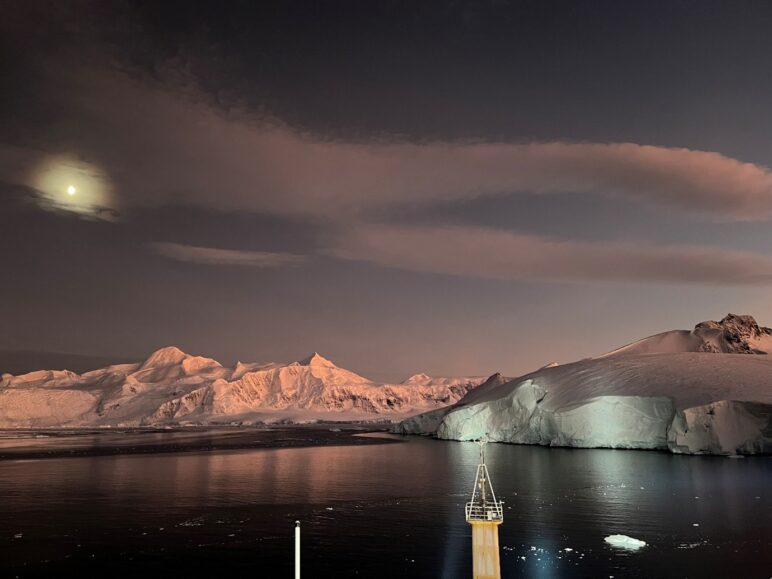
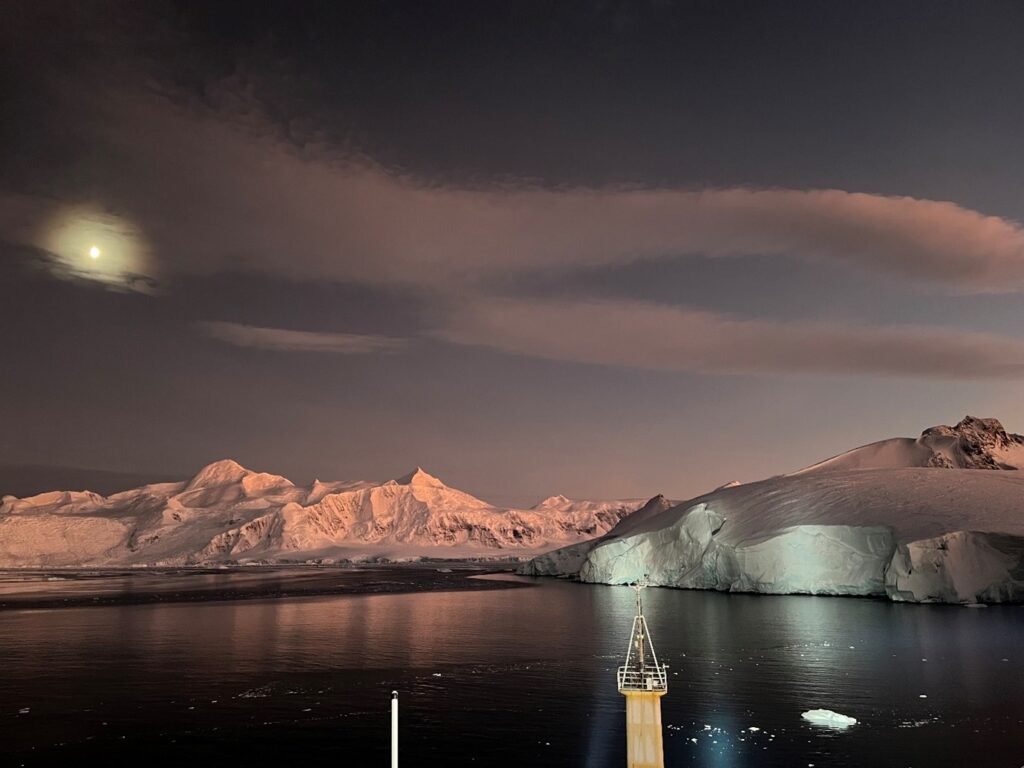
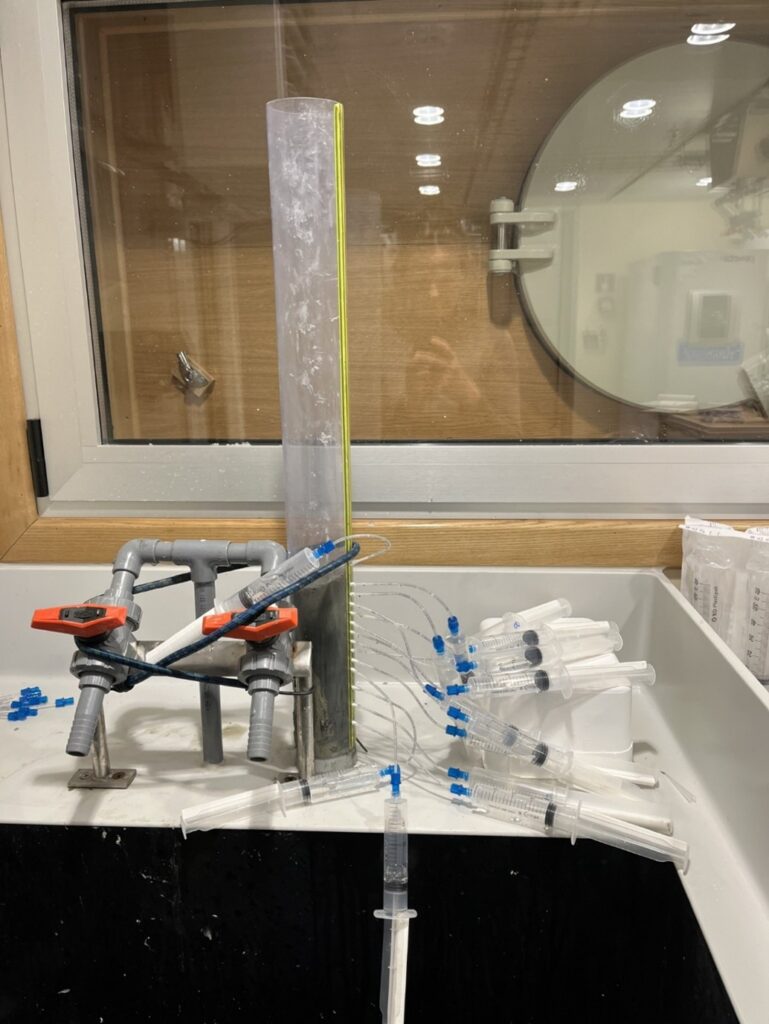
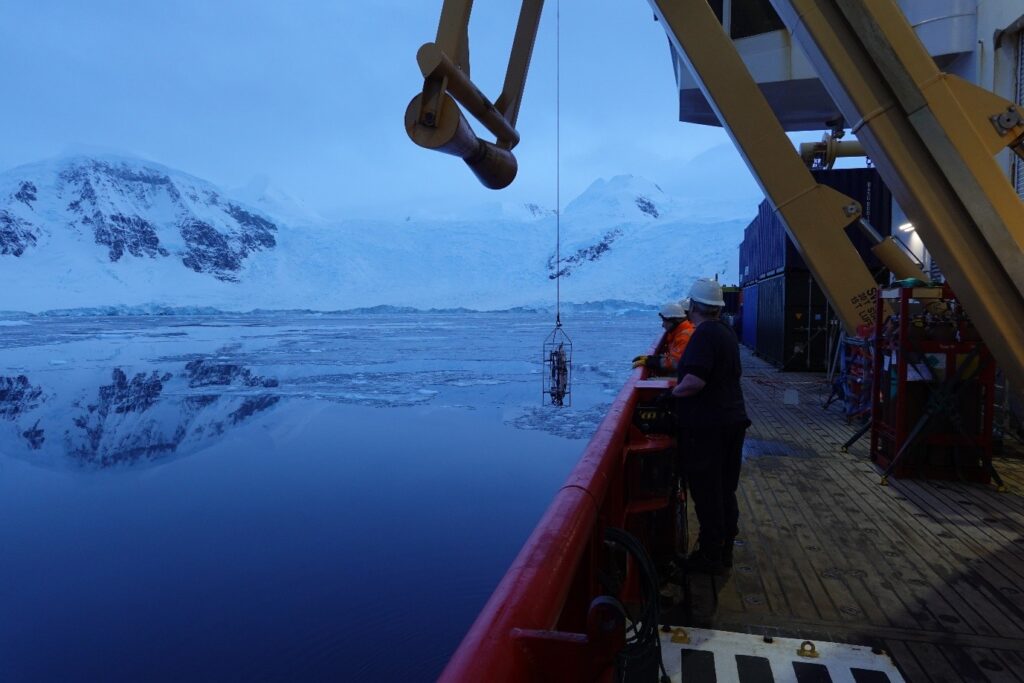
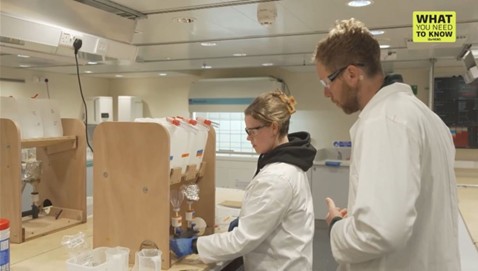
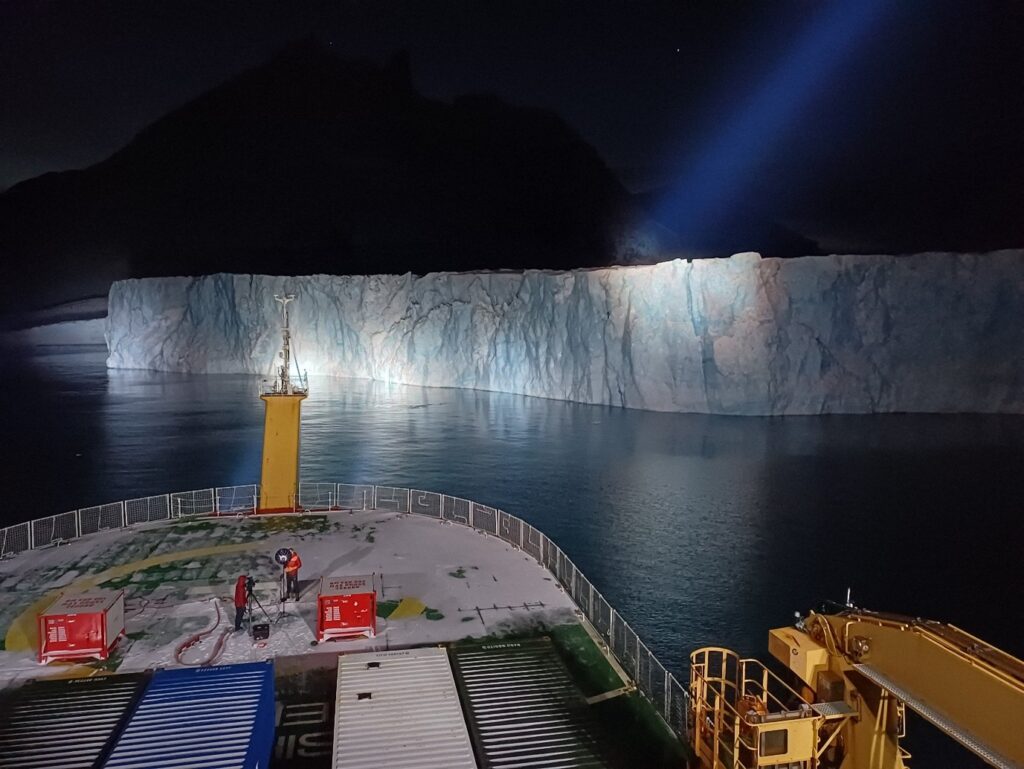
Working on deck in the depth of winter was facilitated with largely mild weather conditions and very little sea ice. Being down there so late in the season, the team were treated to a number of spectacular skies (Fig 1) (neither sunrises nor sunsets!), with low light from ~10:30 to 14:30. Using a single Niskin with messenger on the hydro wire, samples were collected overboard to support the RaTS sampling program: salinity, oxygen isotopes, dissolved nutrients, chlorophyll; as well as for dissolved silicon isotopes, particulate metals, and particulate Si, to support the SiCLING program. Particulate samples were processed in a laminar flow hood to mitigate contamination. Also as part of SiCLING, Rhi led sediment sampling from the single UWITEC corer, which was successfully deployed repeatedly off the side of the ship for the first time. Pore water samples were collected by rhizon filtration for nutrients (N, P, Si), metals (Fe, Mn) and silicon isotopes analysis (Fig 2), and solid sediment samples were collected for porosity and sediment extraction experiments.
A total of 125 over the side events were logged between the two Rothera visits. This number was swelled by water sampling requiring multiple Niskin deployments for each site, as well as a separate CTD cast. Some deployments were concurrent, with surface Niskins done by rope while the Hydro wire went to depth, with either the CTD or a deeper bottle. We had great help as ever from Dave Peck and the rest of the ship’s deck crew, and it was interesting (and sometimes amusing) to see how the ship could deploy the small instruments normally used on small boats at Rothera (Fig 3).
Underway sampling, following on from SD049, was continued on SD050, with assistance gratefully received from Sophia de Maria, a doctor in transit to Rothera and back. Leaving Punta Arenas to the south was extremely scenic, but meant Chilean EEZ waters extended almost to 60°S.
Whale surveys were carried out when we were in transit along the peninsula. This was limited by the light, roughly two hours of dawn immediately followed by two hours of dusk. Highlights were 115 Humpbacks and a single Orca in under three hours as we transited through the Lemaire Channel southbound on June 1st. Humpbacks were seen throughout, including two in Ryder Bay on the 17th June, in full polar night. There are, understandably, very few winter Humpback sightings from the area, though tracking data shows animals lingering into July. Birds and seals were also logged in 30 minute counts, with 14 species of bird and five species of seal recorded south of 60° S. Overall it was very special to be near Rothera into the polar night, and we were very grateful to many people on and off the ship who made plans work at short notice and provided remote help. Hopefully this is the first of a series of winter cruises the SDA undertakes. It was never lost on us that the conditions really should have been colder and icier, though we, and the ship, would have managed if the conditions had been a little harsher.
The Author of this Article Nadine Johnston (BAS), Gabi Stowasser (BAS), Siobhán Foden (BAS), Sammie Buzzard (CPOM), Hugh Venables (BAS), and Mike Meredith (BAS), Rhiannon Jones (BAS)