
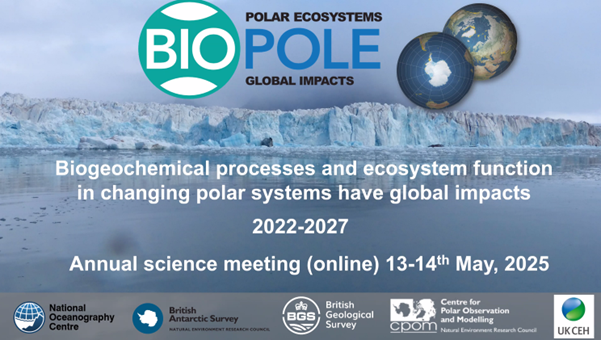
The third BIOPOLE Annual Science Meeting took place online from 13–14 May 2025. The event brought together BIOPOLE Project Members, Early Career Researchers (ECRs), and Programme Advisory Board (PAB) Members. In total, around 10 participants attended in person at BAS, with 46 joining virtually.
Over the two days, the meeting featured interesting discussions, insightful scientific talks, engaging presentations, and a compelling keynote address.
Day 1 Highlights
The meeting began with a project overview and updates from all four BIOPOLE Work Packages (WPs):
- WP1 – Inputs
- WP2 – Processes
- WP3 – Impacts
- WP4 – Management
This was followed by a session on data management and mapping fieldwork, as well as updates from the BIOPOLE Early Career Researcher Network.
A lively quick-fire talk session with Q&A led into the day’s keynote address by Suzanne Tank, titled:
“The Arctic Great Rivers Observatory: Long-Term Trends in River Chemistry Diagnose Multi-Faceted Northern Change.” The keynote was followed by an open Q&A and discussion session.
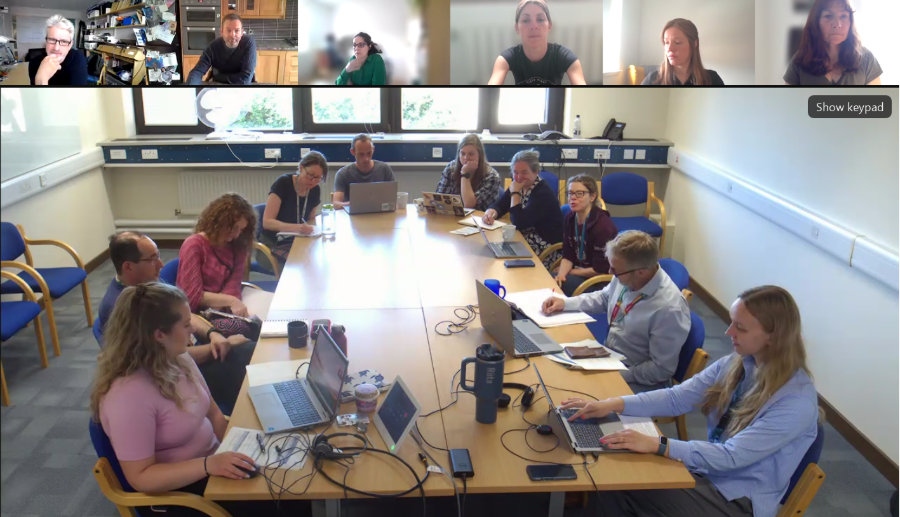
The day concluded with a general wrap-up, followed by closed-door meetings—first with PAB and EB members, and then with the PAB alone.
Day 2 Highlights
The second day opened with a summary of Day 1 and a preview of objectives for Day 2. The morning was dedicated to breakout sessions, covering the following topics:
- BIOPOLE participation in AGU Ocean Sciences Meeting (Glasgow, Feb 2026)
- Copepod lipid pump/diapause observations, modelling, and data sets
- Isotope observations, modelling, and data integration (e.g. freshwater to marine)
- Reconciling nutrient pathways into and out of the Arctic
- Participation in future partner-led campaigns
- Planning for key synthesis papers
In the afternoon, rapporteurs reported back from each session. This was followed by a poster session, where presenters shared their work through 5-minute lightning presentations.
The meeting then welcomed valuable feedback from the PAB on the programme’s progress.
The final segment focused on next steps for BIOPOLE, with group discussions centred on:
- What are the BIOPOLE narratives?
- Plans in the case of a 1-year extension
- Looking beyond BIOPOLE – NC-LTSM3
The meeting closed with a summary and final reflections on the two-day event.
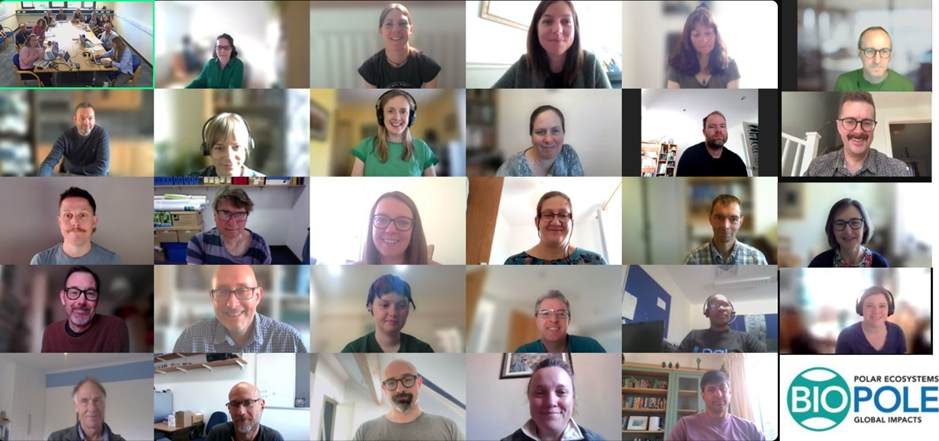
A heartfelt thank you to all who contributed to the success of the BIOPOLE ASM 2025, and to everyone involved in the ongoing work of the BIOPOLE programme.
The author of this article Ruta Hamilton (British Antarctic Survey)