
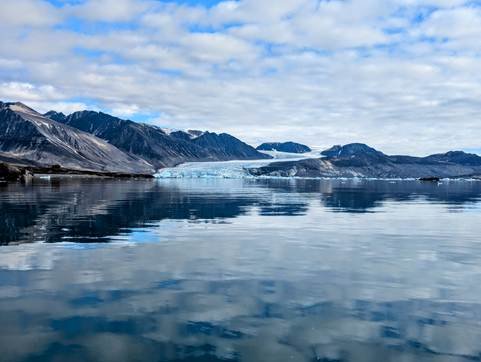
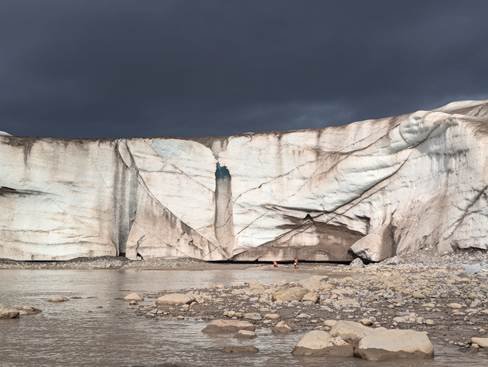
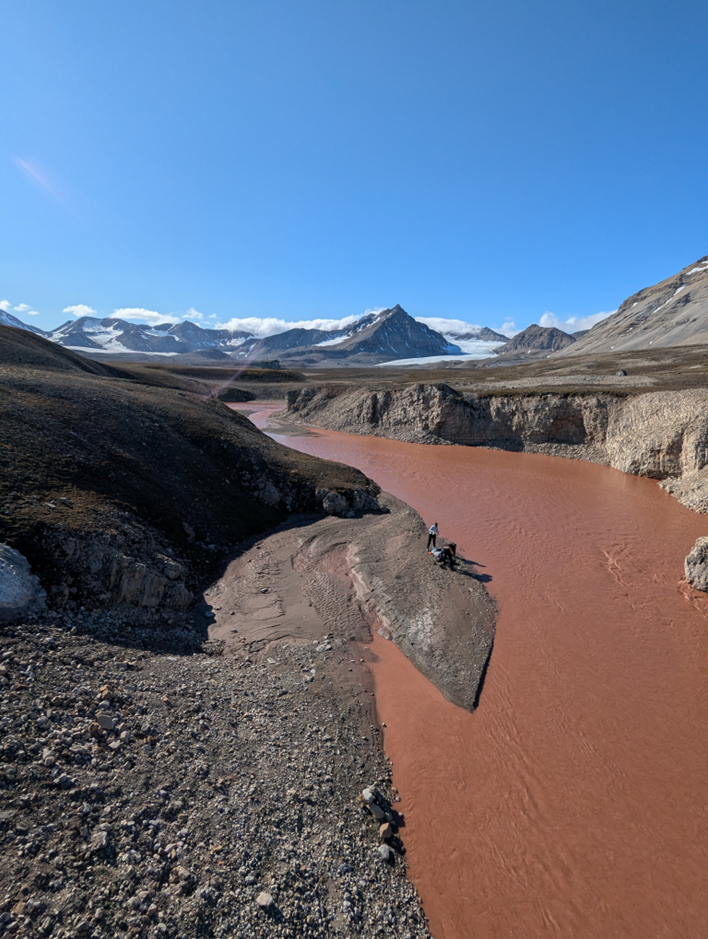
Glaciers were once thought to be inert environments, too cold for biology or for chemical reactions to occur. It’s only in the last two decades that we’ve discovered that glacial environments are “hot spots” for biogeochemical processes that release biologically important elements. As glaciers flow, they crush the underlying rock into very fine “glacial flour”. When this material reacts with water flowing beneath glaciers and ice sheets, the unusual chemical conditions allow new, solid materials to form. These very fine particles are highly reactive and can release elements and compounds into the environment. Furthermore, we’re only just beginning to unpick the rich microbial processes that drive further reactions in these subglacial environments. The diversity of microbes on, in and under glaciers has even led one scientist suggesting “glacial flour” should really be “glacial sourdough”!
Kate Hendry (BAS) and colleagues from around the world, led by Jon Hawkings (UPenn) and including BIOPOLE partners, published a review of these incredibly important and sensitive environments. The review documents the web of biogeochemical reactions around glaciers, in proglacial environments, and across the land-ocean continuum. The authors conclude that it’s more important than ever that we understand the drivers behind these reactions. Glacial flour is an important source of critical nutrients for coastal marine environments and has attracted substantial interest as a fertiliser for crops and for carbon dioxide removal via enhanced rock weathering. However, glacial flour supply also has potential negative consequences for downstream plankton through changes in water quality and the release of toxic metals. Given glaciers are retreating at an accelerating pace, we need to understand the drivers behind these ecosystem impacts, and the knock-on effects for society, to be able to predict – and mitigate against – future challenges.
Hawkings, J. R., Bradley, J. A., Doting, E. L., Hassan, N., Hendry, K. R., Holt, A. D., … & Bhatia, M. P. (2025). Glacier biogeochemical cycling and downstream impacts. Nature Reviews Earth & Environment, 1-20.
https://www.nature.com/articles/s43017-025-00751-1
The authors dedicated this review to the memory of Maya Bhatia. “Maya died unexpectedly during the writing of this review, and we are profoundly indebted to her input in conceiving the manuscript and to the scientific discipline at large. Maya made key contributions to our understanding of glacier biogeochemistry that are described in the article, particularly in framing the importance of glaciers and ice sheets in wider biogeochemical cycles, without which the field would be in a far more premature position. Maya was an outstanding person, scientist, colleague and friend, and is sorely missed.”
The Author of this Article Kate Hendry (British Antarctic Survey)